
Best for MSP sales preparation: SCOUTz. Best for Microsoft 365 posture review: Microsoft Secure Score. Best for structured control assessment: CISA CSET. These security assessment tools for accounting firms answer different questions; this 2026 guide separates prospect evidence, authorized tenant review, network discovery, and public website checks.
- SCOUTz is the best fit for MSP prospect intelligence and evidence-led sales preparation, not a complete security assessment.
- Choose security assessment tools for accounting firms by evidence scope, authorization requirements, and the decision each finding supports.
- Microsoft Secure Score supports authorized tenant posture reviews; CISA CSET supports structured control assessments.
- Nmap supports authorized network discovery; Qualys SSL Labs checks public website TLS configuration.
- Public-domain evidence does not establish internal controls, a confirmed breach, or buying intent.
Why this matters
An accounting firm can have a well-configured website and weak internal access controls. The reverse is also possible. An external finding answers an external question, not every question about the firm.
For an MSP, the first decision is therefore scope. Are you preparing for a prospect conversation, reviewing an authorized Microsoft 365 tenant, documenting controls, or investigating network exposure? Choose the tool after you choose the question.
Accounting firms handle financial records and client information. Your assessment should connect evidence to the workflows under discussion: receiving documents, sharing files, managing staff access, and administering systems. Do not assume the firm's applications, regulatory obligations, or technology stack from its industry label.
A finding is evidence to investigate, not proof that the prospect needs your service. That distinction belongs in the sales conversation and the technical report.
What makes the best security assessment tools for accounting firms
Use these criteria before comparing products:
- Evidence scope: Identify whether the tool examines public records, tenant settings, questionnaire responses, network services, or website TLS.
- Authorization boundary: Separate public-domain research from customer-authorized access and active testing. Get explicit approval for tenant access and network scanning.
- Source and date: Preserve where the evidence came from and when it was observed. A report date alone does not establish when each underlying check ran.
- Interpretation limits: Distinguish observed facts from inferred consequences. Unread evidence stays unknown; it does not become a passing result.
- Decision usefulness: Prefer findings that support a specific question, verification step, or agreed remediation task.
- Proof after action: Choose a workflow that can compare the original evidence with a later observation of the same condition.
For your 2026 shortlist, reject any reporting workflow that erases the difference between an observed setting, a staff answer, and an analyst's interpretation. Those are different evidence types.
Security assessment tools at a glance
These 5 tools occupy distinct assessment roles. The order reflects the MSP engagement sequence, starting with sales preparation—not a claim that one tool replaces the others.
| Tool | Best for | Standout capability | Key limitation |
|---|---|---|---|
| SCOUTz | MSP prospect intelligence and sales preparation | Dated domain and Microsoft 365 review evidence | Does not replace MSP judgment or establish buying intent |
| Microsoft Secure Score | Authorized Microsoft 365 posture review | Microsoft security recommendations tied to supported configurations | A score is not a complete security assessment |
| CISA CSET | Structured control assessment | Guided assessment questions and reporting | Responses need supporting evidence |
| Nmap | Authorized network service discovery | Host, port, and service discovery | Discovery does not prove exploitability |
| Qualys SSL Labs | Public website TLS review | Server certificate and TLS configuration testing | Website TLS does not describe tenant or internal security |
1. SCOUTz: best for MSP prospect intelligence and sales preparation
SCOUTz provides dated cybersecurity evidence and prospect intelligence through domain and Microsoft 365 reviews. Its role is to help MSPs prepare for sales conversations with prospective clients. It is not a contact database or a substitute for technical judgment.
Best for: MSP owners and sales leaders preparing an evidence-led conversation with an accounting firm.
Keep 2 evidence lanes separate: public-domain evidence and customer-authorized, read-only Microsoft 365 evidence. Public-domain findings concern what is observable externally. Tenant evidence concerns what authorized access actually allowed the review to read.
For example, an observation about a domain's DMARC record can support a question about email authentication policy. It cannot establish whether every sender is correctly aligned, whether messages reached recipients, or whether a compromise occurred.
SCOUTz pros:
- Matches the MSP prospect-intelligence and sales-preparation use case.
- Provides dated evidence for a conversation grounded in observations.
- Covers domain and Microsoft 365 reviews.
- Supports a clear distinction between external evidence and authorized tenant evidence.
SCOUTz cons:
- A finding does not establish buying intent or an unresolved problem.
- Unread tenant evidence remains unknown.
- The MSP must interpret findings and verify their relevance with the prospect.
For a 2026 prospect meeting, select a relevant observation, explain its limits, and ask who owns the associated process. Do not turn the meeting into a catalogue of alarming findings.
Verdict: Buy for MSP sales preparation; skip as a replacement for a complete accounting-firm security assessment.
2. Microsoft Secure Score: best for authorized tenant posture review
Microsoft Secure Score summarizes security posture through recommended actions in supported Microsoft services. Microsoft Learn documents how the score and recommendations work. Use that documentation to interpret the current recommendation rather than treating the number as a universal security grade.
Best for: MSP technicians reviewing an accounting firm's Microsoft 365 posture with authorized access.
The useful output is the underlying recommendation and its relationship to the tenant's configuration. Review the recommendation's applicability, the evidence available, and the firm's operational requirements before prescribing a change.
Microsoft Secure Score pros:
- Keeps the review connected to Microsoft service configurations.
- Provides recommended actions that technicians can examine individually.
- Supports repeat review of posture as configurations change.
- Gives a starting point for a tenant-focused improvement discussion.
Microsoft Secure Score cons:
- Does not assess every application or system the accounting firm uses.
- The score alone does not explain business impact or control effectiveness.
- Recommendations still require technical and operational judgment.
During a 2026 review, distinguish a recommendation shown in the interface from a setting you have independently inspected. Document exceptions and compensating controls instead of pursuing a higher score without context.
Verdict: Buy into the workflow for authorized tenant posture review; skip the score as a standalone assurance statement.
3. CISA CSET: best for structured control assessment
CISA's Cyber Security Evaluation Tool, or CSET, supports guided cybersecurity assessments using questions and assessment frameworks. CISA's CSET documentation describes its assessment and reporting functions. It helps structure a control conversation rather than discover every technical condition automatically.
Best for: MSPs documenting control coverage, evidence requests, and assessment decisions with an accounting firm's management team.
A questionnaire creates consistency, but an answer is not the same thing as proof. If a respondent says access is reviewed, ask for the procedure, review record, and responsible owner that support that statement.
CISA CSET pros:
- Organizes assessment questions into a repeatable process.
- Helps expose unanswered questions and documentation gaps.
- Supports reports that can inform an improvement plan.
- Works as a framework for conversations beyond a single technology platform.
CISA CSET cons:
- Assessment quality depends on accurate answers and supporting evidence.
- Does not replace technical configuration checks.
- Framework selection still requires knowledge of the engagement's scope.
Do not present completion of a questionnaire as certification or proof of regulatory compliance. Record which questions were supported, which were answered without evidence, and which remain unknown.
Verdict: Buy into the workflow for structured control assessment; skip unsupported answers as proof that a control works.
4. Nmap: best for authorized network service discovery
Nmap discovers hosts and examines exposed ports and services within a defined scan scope. Its official reference guide documents discovery, scanning, service detection, and scripting capabilities. Use the specific scan configuration—not the tool name—to explain what the results cover.
Best for: Security practitioners checking reachable network services during an explicitly authorized technical assessment.
An open port means a service was reachable under the conditions of that scan. It does not automatically mean the service is vulnerable, improperly exposed, or reachable from every network location.
Nmap pros:
- Supports precise targeting of authorized hosts and networks.
- Identifies reachable services for further investigation.
- Makes scan options part of a reproducible technical record.
- Helps compare expected exposure with observed exposure.
Nmap cons:
- Requires technical skill to select and interpret scan options.
- Results depend on scan location, filtering, and target behavior.
- Service discovery does not prove exploitability or business impact.
Agree the targets, source location, permitted techniques, and operational constraints before scanning. Keep the command configuration and observation date with the results so another practitioner can understand the test.
Verdict: Buy into the workflow for authorized network discovery; skip vulnerability claims based only on an open port.
5. Qualys SSL Labs: best for public website TLS review
Qualys SSL Labs' SSL Server Test examines public-facing server TLS configuration and certificates. Its assessment documentation explains the checks and rating methodology. This is a narrow website transport-security review, not a review of an accounting firm's internal environment.
Best for: MSPs checking the TLS configuration of an accounting firm's public website endpoint.
Confirm that the hostname belongs in the assessment and identify who operates the endpoint. A website hosted by an external provider can require a different remediation owner from the firm's internal systems.
Qualys SSL Labs pros:
- Focuses on certificate and TLS configuration evidence.
- Produces findings tied to a specific public hostname.
- Helps separate website transport settings from broader security claims.
Qualys SSL Labs cons:
- Does not inspect Microsoft 365 tenant controls or internal networks.
- A rating does not establish that the website application is secure.
- Endpoint ownership and hosting arrangements need separate confirmation.
Treat the result as a dated observation of that endpoint. Investigate the finding and its current relevance before putting it into an owner-facing proposal.
Verdict: Buy into the workflow for public website TLS review; skip it as a verdict on the entire accounting firm.
How the ranking works
This ranking uses scope, authorization, evidence quality, interpretation limits, decision usefulness, and repeat verification. It assigns each tool a different job rather than comparing unrelated outputs as though they were interchangeable.
The ordering favors the MSP's engagement sequence. Sales preparation comes first; authorized tenant review, control assessment, network discovery, and endpoint checks follow when the agreed scope requires them. It does not imply hands-on comparative testing or measured sales results.
Turn evidence into insight, then proof
For a 2026 assessment, use the same discipline across every tool. Start with 3 evidence fields: source, observation date, and scope. Add the finding, its limits, and the question or action it supports.
Evidence
Record the observation without embellishment. Name the domain, tenant setting, questionnaire response, network target, or website endpoint involved. Keep inaccessible or unread areas explicitly unknown.
Insight
Explain the consequence that the evidence supports. A published email-authentication policy supports a conversation about sender handling; it does not prove how every message was processed. Ask the accounting firm to confirm ownership and context.
Proof
Agree the action and the method of verification. After a change, repeat the relevant check and retain the new observation. Rechecking a website cannot prove that a tenant access policy changed.
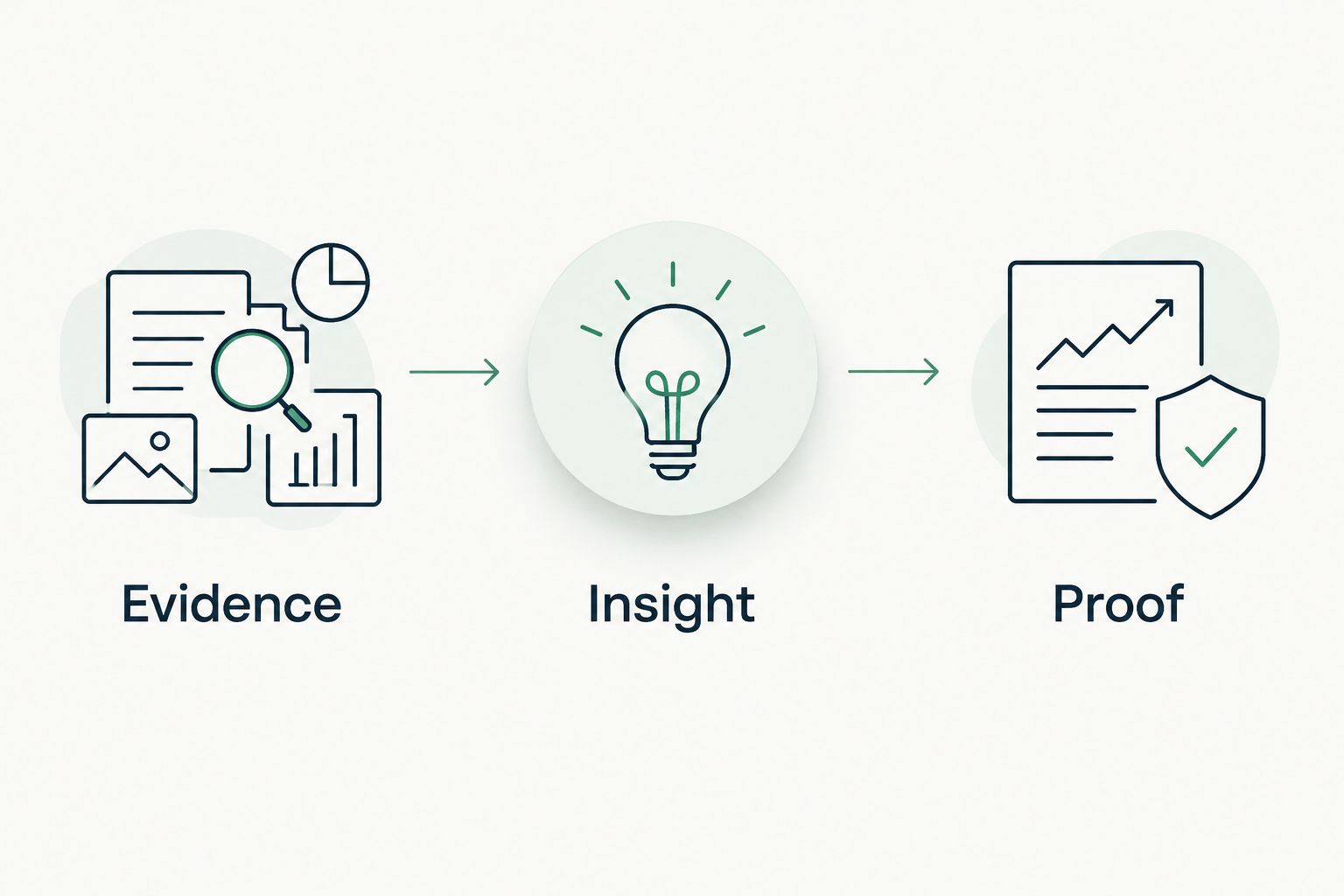
Use this record in proposals and QBRs. Separate work completed from conditions still under investigation. A remediation task is not verified merely because someone marked it complete.
Which security assessment tool should you choose?
Choose SCOUTz when your immediate job is MSP prospect intelligence and sales preparation for an accounting-firm conversation. Choose Microsoft Secure Score for authorized Microsoft 365 posture review, CISA CSET for structured control assessment, Nmap for authorized network discovery, and Qualys SSL Labs for public website TLS review.
Do not start by assembling every tool. Start with the decision the firm needs to make, then collect evidence that answers it. Expand the scope only with a clear purpose and the necessary authorization.
FAQ
What's the best security assessment tool for accounting firms in 2026?
The best tool depends on the assessment scope. Use prospect intelligence for sales preparation, Microsoft Secure Score for authorized tenant posture review, CISA CSET for structured control assessment, Nmap for authorized network discovery, and Qualys SSL Labs for public website TLS checks.
Can public-domain checks prove an accounting firm has been breached?
No. Public-domain checks establish observations within their scope, not a confirmed breach. Investigating a suspected incident requires separate evidence and an appropriate investigation.
Is Microsoft Secure Score a complete security assessment?
No. Microsoft Secure Score supports posture review across supported Microsoft services. It does not assess every system, application, process, or control at an accounting firm.
Do MSPs need permission to assess a Microsoft 365 tenant?
Yes. Tenant assessment requires customer-authorized access appropriate to the review. Document the permitted scope and keep unread evidence explicitly unknown.
Does an open port mean an accounting firm's network is vulnerable?
No. An open port establishes that a service was reachable under the scan conditions. Vulnerability and impact require further investigation within the authorized scope.
Can a security questionnaire prove a control is effective?
No. A questionnaire records responses that need supporting evidence. Procedures, configuration records, review records, and appropriate technical checks help establish what the control actually does.
What should an MSP include in an evidence-led proposal?
Include the observation, source, date, scope, interpretation limits, proposed action, and verification method. Separate confirmed evidence from unanswered questions and avoid claiming that a finding establishes buying intent.
One last thing
Unknown is a useful assessment result. It identifies the next evidence request without pretending the control passed or failed.
Before sending a proposal, find every sentence that turns an observation into certainty. Replace unsupported claims with the observed fact and a specific verification question. That makes the proposal more defensible without making it less direct.


